Thursday, February 23, 2012
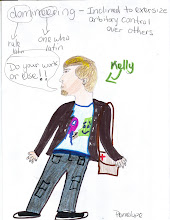
Downton State Correctional Abbey: Week 2

Monday, February 13, 2012
Downton State Correctional Abbey: Week 1

When trapped under a single roof, the human beast is laid bare. Hate, violence, rage, desperation, scheming, vying for a scrap of power, and love are all pushed to the extreme when there is no hope or escape from that single edifice, but nothing trumps the maintenance of the social machine.
Yes, I’ve been watching Oz, HBO’s seminal prison-set drama, and Downton Abbey, the BBC’s immaculate period piece, at the same time. See, because HBO doesn’t let Netflix stream their stuff, I’ve been getting Oz DVD’s through the mail, one at a time, like a savage.
Thursday, January 26, 2012
What We Lose When We Lose Chuck

Chuck is coming to a final end. In the largest sense, big deal—I’ve dealt with far more painful losses lately. In the TV sense, big deal—Chuck had one exceptional season, and thereafter was simply fun and pretty good. Furthermore, it was never a show that had very certain footing. It would get picked up for about half a season, with no promise of any more. So it was written with that in mind, with everything resolving in episode 13 or so, only to get picked up for the rest of the season, at which point the crew had to string together what they could into an ending, a second one, no less. At times, it was sloppy in narrative, and cheap in appearance and execution (I was particularly sensitive to some dreadful ADR), but it was always pretty fun. Still, this isn’t a magnificent culmination on the order of The Wire ending, nor the close of a cultural era on the order of Lost, nor a tragedy on the order of Farscape. Chuck is ending. Oh well.
But it’s not like it goes away unmourned. There are plenty of things about Chuck that feel special or unique beyond a bunch of characters I like to see running around, and TV will be a poorer place when it goes, and as it does, it seems like a good time to highlight and remember them.Tuesday, November 1, 2011
The Right and the Wrong Guy for the Job

Sometimes, going through my Netflix queue is like travelling back in time. I usually can’t pinpoint actual events or anything, but I can see clumps of movies I added when I was feeling up, feeling down, feeling unwisely nostalgic, in the mood for challenging things, in the mood for utter trash, times when I was catching up on great 2007 films I missed, and so on. Sometimes, though, I can pinpoint something more specific—I’m obviously getting to a part of my queue built while I was playing Red Dead Redemption, because there is a whole lot of Sergio Leone in the weeks ahead. Right now, though, I’m clearly in the spot made when director David O. Russell was going to be making a movie out of Uncharted, my most treasured of current games. I’d never seen a Russell film, which isn’t too surprising as he hasn’t made many, so I was curious to see what made him the first choice.
The first film to arrive was 1999’s Three Kings, which instantly made the case that Russell was perfect to adapt Uncharted, and wholly unsuited to such an endeavor. How so? Let’s see.Friday, October 21, 2011
It’s That Sort of Day: Ode to My Favorite Companion

The danger in sharing an ongoing story is the risk that you’ll have to put an asterisk on your assessments. Most of You’ll Love This covered shows that were done for this reason—they could be definitive, which was reassuring, because invariably quality goes down over time. Settings become strained, stories get repeated, tricks lose their effectiveness, characters wear out their welcome. Right around 4 years, it seems, shows would be well served to start thinking about how to close things out, while the sense of freshness is still a recent memory, before this inevitable entropy infects the shows bones. For a show to enter my favorite phase in its 5th (or, depending, 47th) year? Why only the most remarkable man in the universe could accomplish such a feat!
I covered Doctor Who at the end of Series 4, including the specials that completed the journey of the much beloved Tenth Doctor, which seemed like a pretty good point to take stock. Both a new show-runner was being put in charge, and a new actor would assume the role of the Eleventh Doctor—chances were, it’d be a whole new show. Miraculously, it turned from a show I enjoyed into a show I adored. Retro camp got dialed down in favor of something closer to Henson-esque whimsy, serialization increased, plots increasingly became intricate time riddles, character bits and witty jokes abounded. It was a show that featured a more nuanced, interesting and often funny take on the Doctor (who now had an absolutely killer musical cue), accompanied by my absolute favorite companion. With the recent end of series 6, it seems that companion is leaving the stage. If that’s the case, I’m taking the chance to extol the virtues of the Doctor’s greatest companion: the Pond-Williamses. Unfair to call two characters one companion? Too bad!Friday, September 23, 2011
Case for Revision: Breaking Bad

Saturday, September 10, 2011
Two Lamentations

Subscribe to:
Posts (Atom)